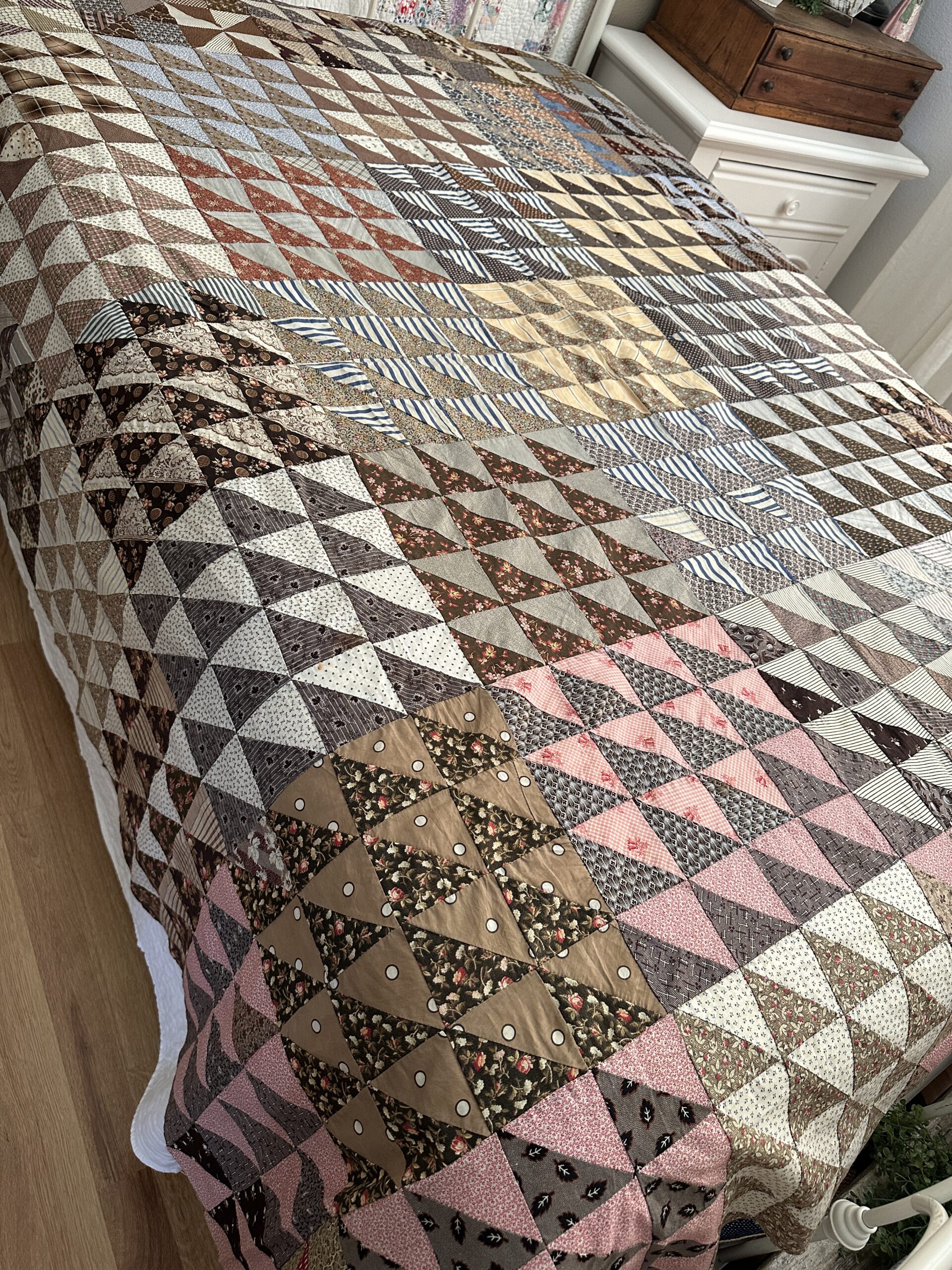
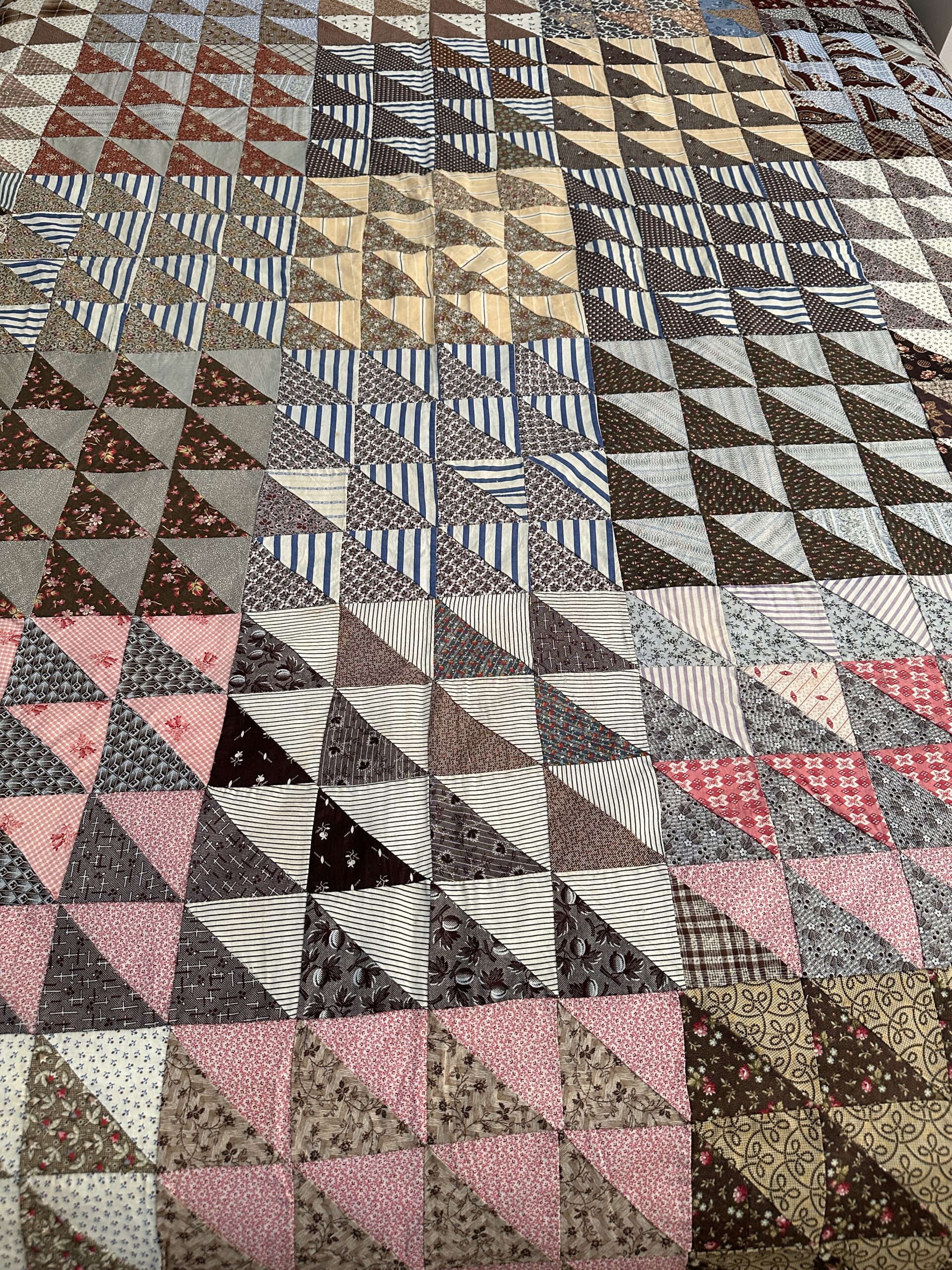
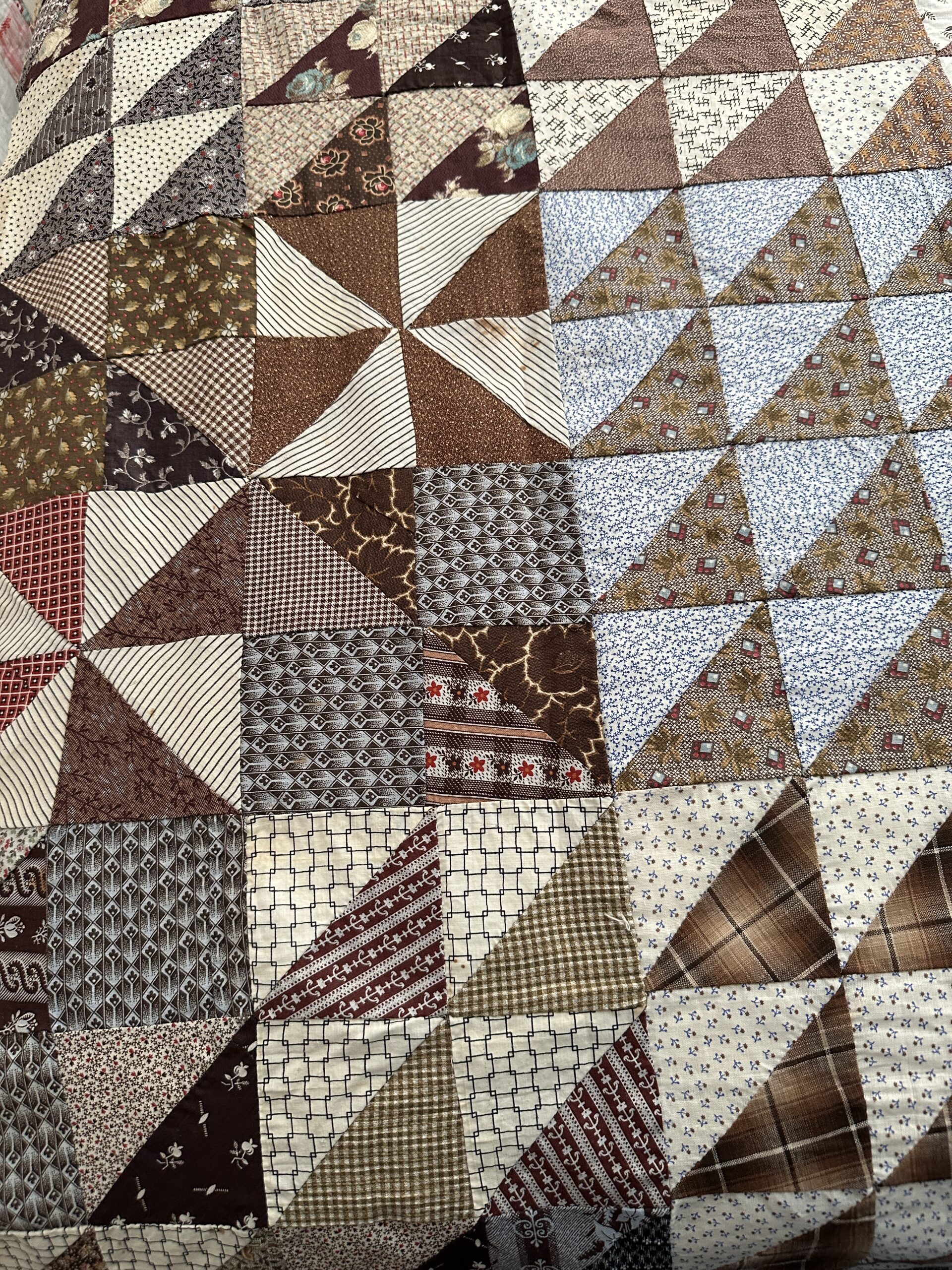
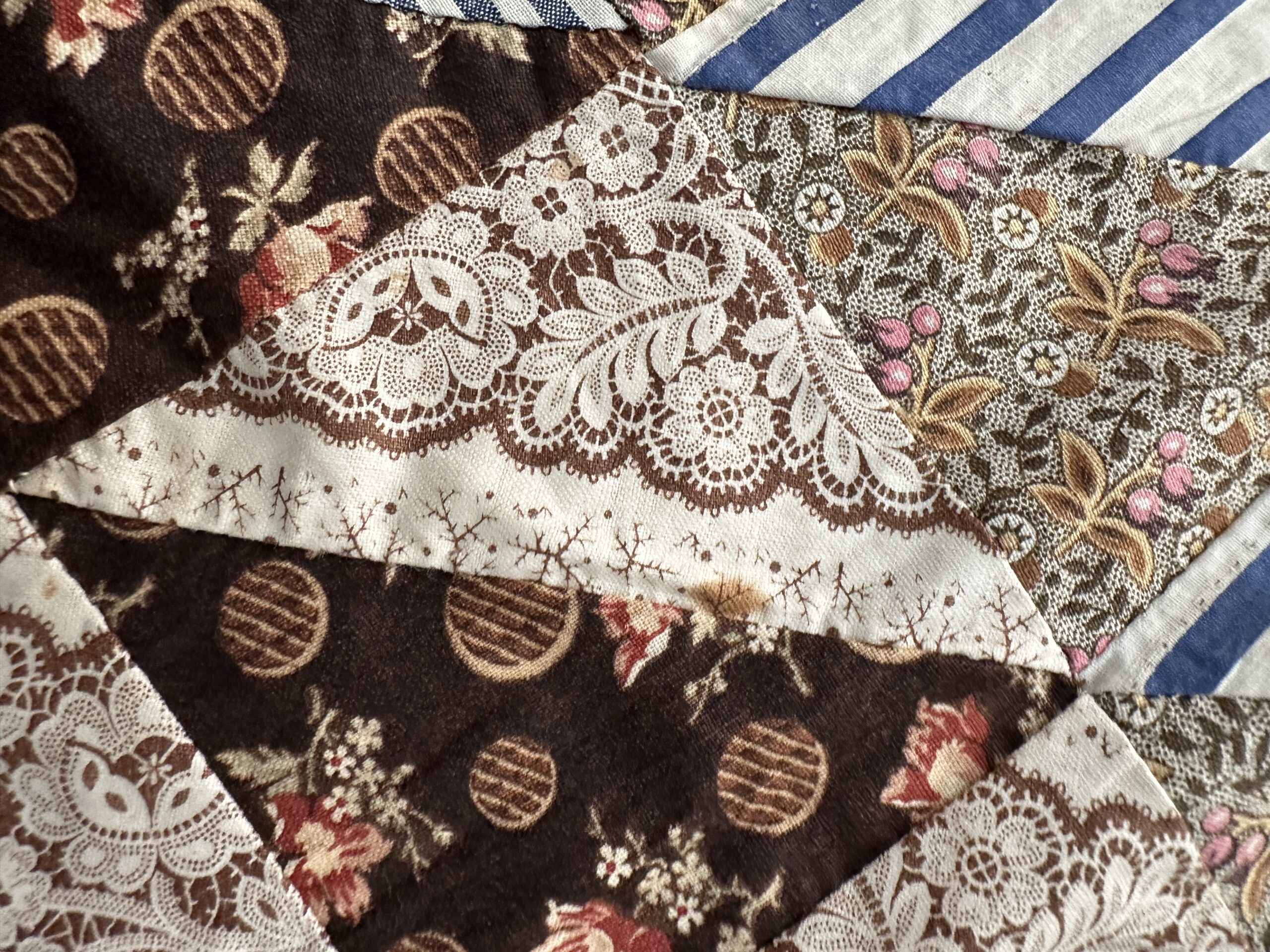
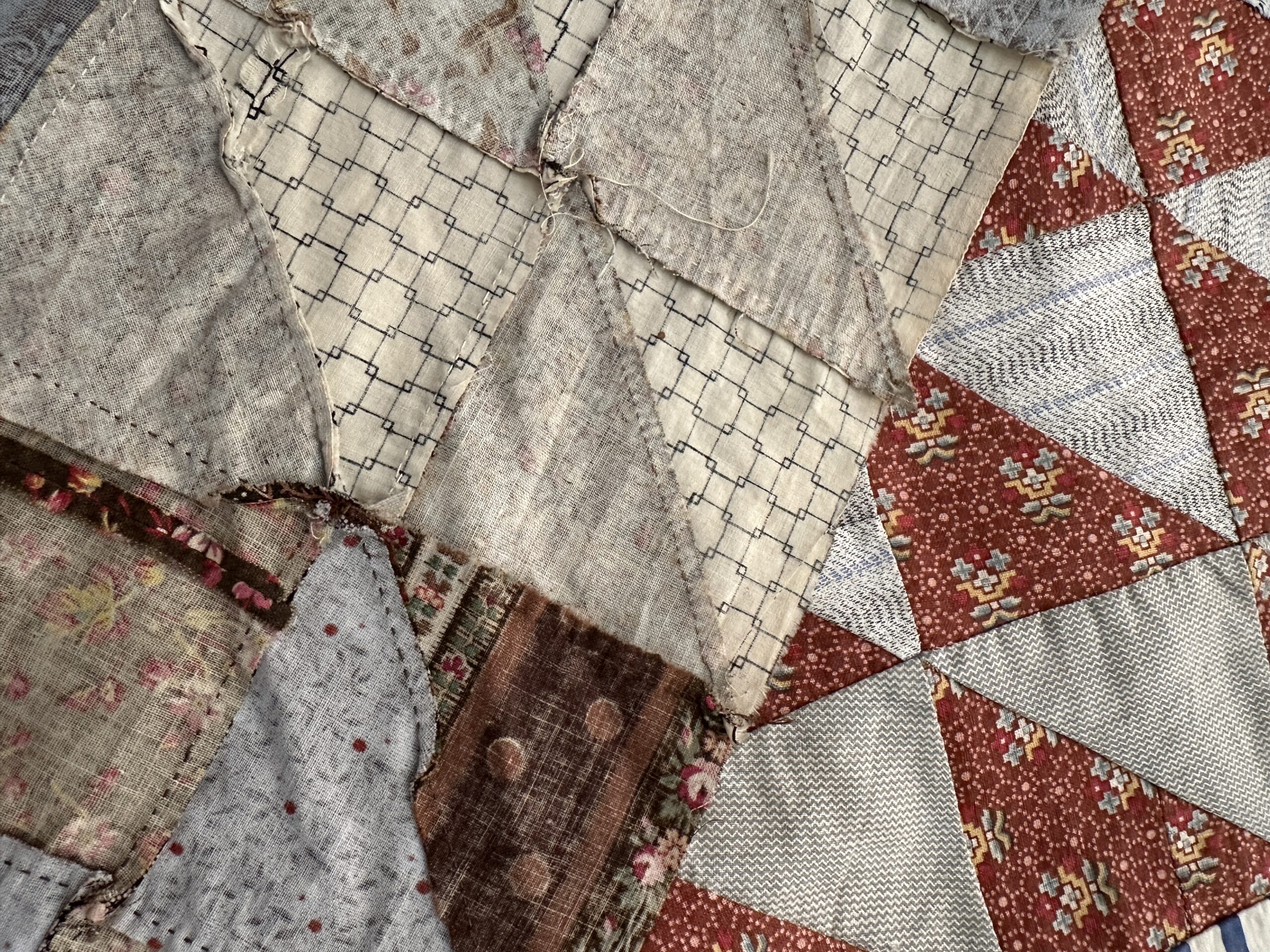
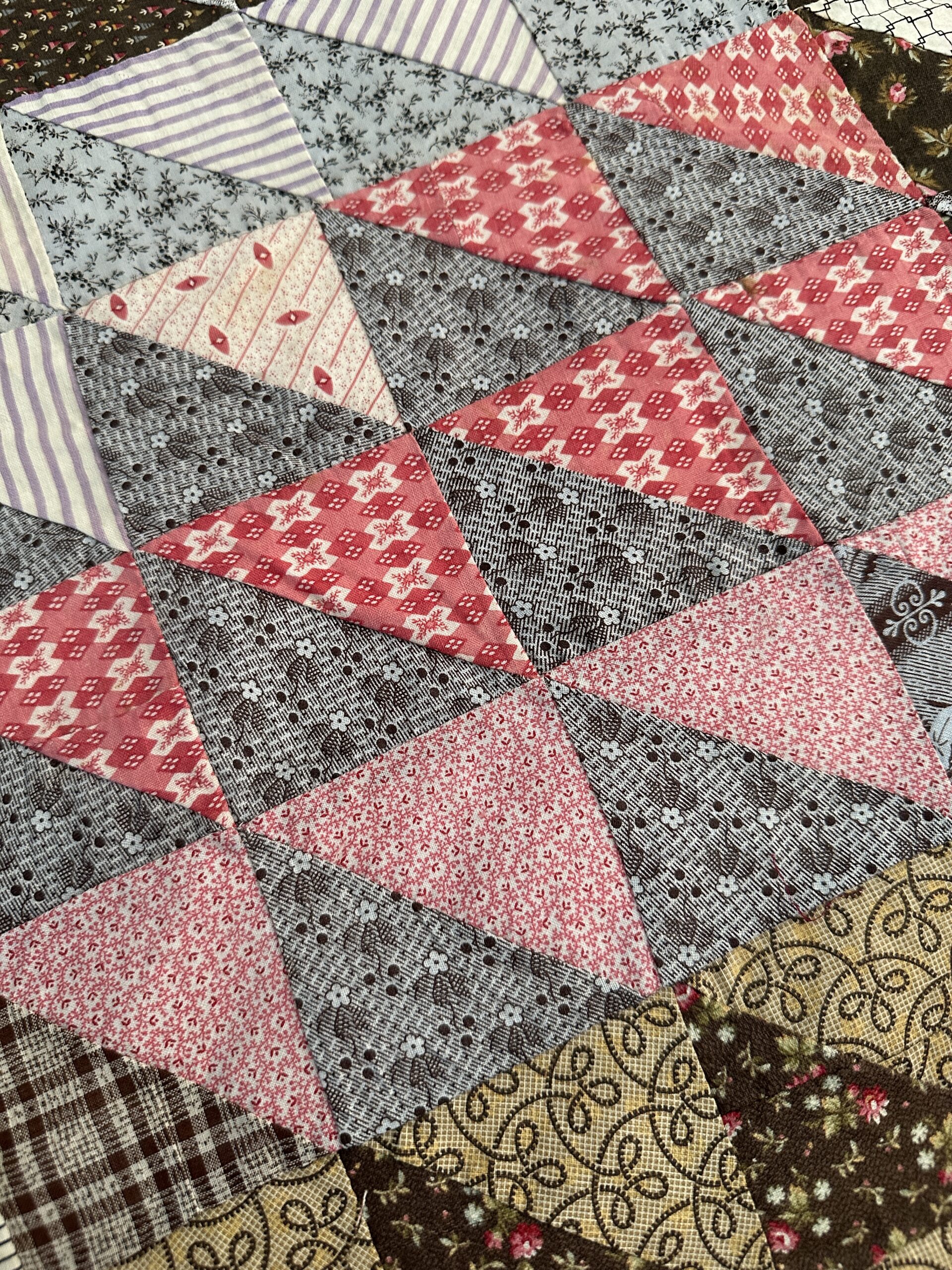
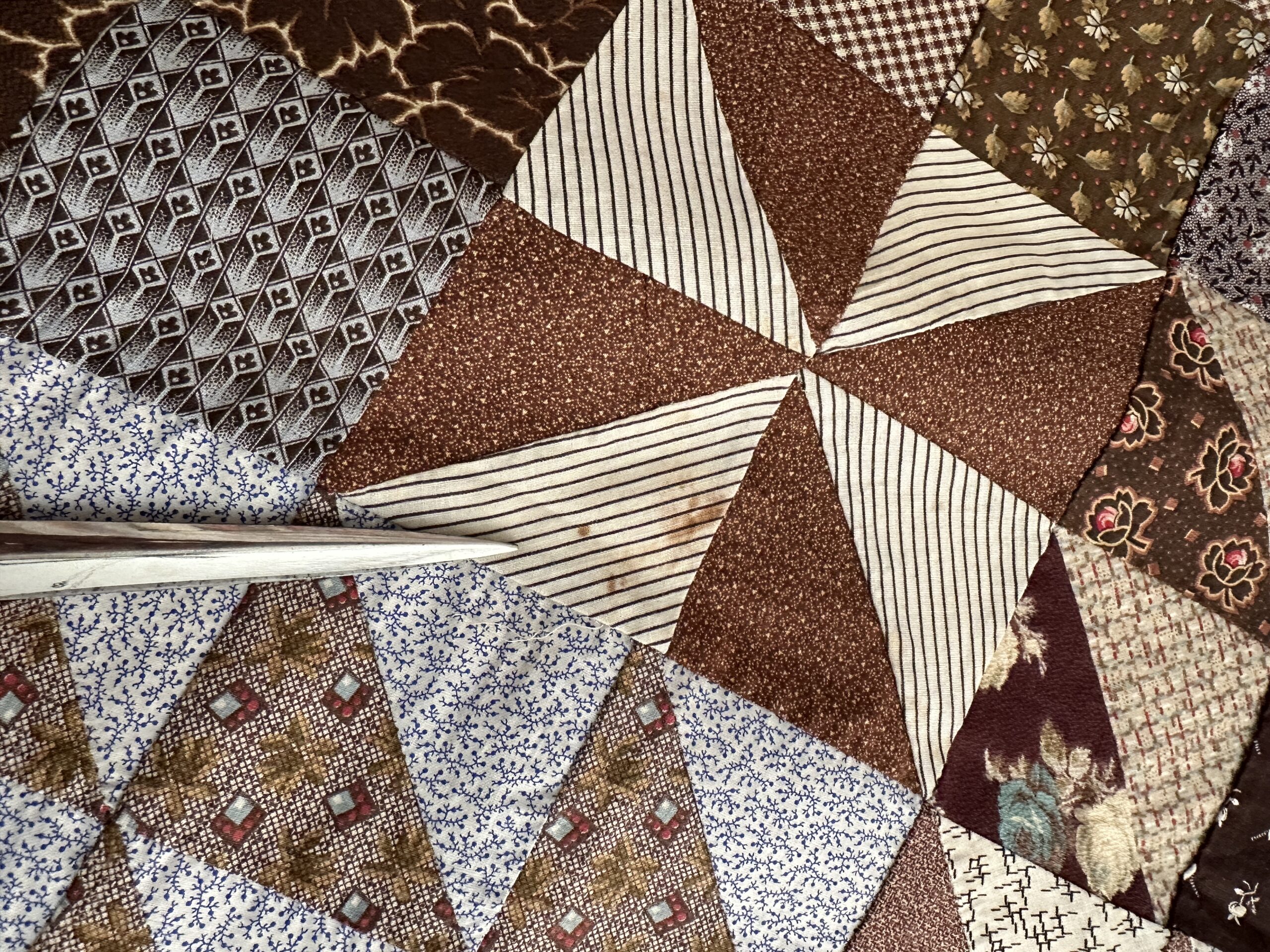
Lovely antique quilt top using the “flying geese” pattern with some “pinwheels” in the corners
Measures a large 80 x 80″
Pieced by hand with such amazing, tiny stitching that we mistook it at first for treadle stitching!
Crisp, never used or washed.
Near mint, there is age spotting only. See photos
Displays beautifully.
Price includes free USA shipping, International customers, please contact us.
***************************************************************************************
Great Ideas to Use an Antique Quilt Top
- Complete the Quilt: Add batting, backing, and quilt it (by hand or machine) to create a functional quilt for a bed, throw, or wall hanging. A professional quilter can help preserve its antique integrity.
- Wall Art: Hang or frame it as a decorative piece using a hanging sleeve or archival materials to protect it. Display in low-light areas to prevent fading.
- Table Runner/Tablecloth: Use smaller tops or sections as a table runner or tablecloth for special occasions. Add a protective layer (e.g., glass or acrylic) for durability.
- Pillow Covers: Cut sections to make decorative pillow covers, finishing edges to prevent fraying. Ideal for smaller or damaged tops.
- Tote Bags/Purses: Repurpose sections into bags, reinforcing with lining for strength, creating a functional, artistic item.
- Make a shower curtain! See below for tips….
- Clothing/Accessories: Fashion sections into vests, jackets, or scarves, but cut carefully to avoid damaging valuable pieces.
- Shadow Box Display: Place portions in a shadow box with acid-free backing for a museum-style display, ideal for fragile tops.
- Patchwork Projects: Blend pieces into new quilts or mixed-media art, combining antique and modern fabrics.
- Preservation: Store flat in acid-free tissue or cotton sheets in a climate-controlled environment for future generations, displaying occasionally at quilt shows.
How to Use An Antique Quilt Top as a Shower Curtain
- Reinforce the Quilt Top:
- Attach a sturdy, waterproof liner (e.g., vinyl or polyester) to the back to protect the quilt top from water exposure. Sew or use fabric-safe adhesive to secure it.
- Add a durable backing fabric to strengthen the quilt top, as antique fabrics may be too delicate for hanging without support.
- Add Grommets or Loops:
- Sew or install rust-proof metal/plastic grommets along the top edge for shower curtain hooks, or create fabric loops for hanging.
- Ensure the quilt top is reinforced at these points to prevent tearing under the weight.
- Size Adjustment:
- Standard shower curtains are about 72×72 inches. If the quilt top is too small, add complementary fabric borders; if too large, carefully trim or fold excess, preserving key patterns.
- Decorative Use Only:
- Use it as a decorative outer curtain with a waterproof inner liner to minimize direct water exposure, keeping the shower rod accessible for both layers.
Recommendations
- Alternative Approach: Consider using the quilt top as a decorative valance or partial curtain above the shower, paired with a waterproof curtain below, to showcase its beauty without risking damage.
- Preservation Priority: If the quilt top is valuable or in fragile condition, opt for a less risky use (e.g., wall art or pillow covers). Replicate the quilt top’s design with modern, water-resistant fabric for a shower curtain instead.
- Professional Guidance: Work with a textile conservator or seamstress experienced in antiques to ensure proper reinforcement and installation.
General Tips for Antique Quilt Tops
- Assess Condition: Check for weak seams, fading, or brittle fabric. Fragile tops are better suited for display than functional use.
- Consult Experts: Before altering, get an appraisal from a quilt historian or textile conservator to understand its value and preservation needs.
- Preserve History: Document its origins, patterns, or any known history to maintain its story.
- Storage: If not in use, store in acid-free tissue or cotton in a climate-controlled space to prevent degradation.
What is an antique quilt top?
An antique quilt top is the patchwork and/or appliqued front of a quilt that was never completed with batting and backing. These unfinished projects are highly collectible and valued for their historic fabrics, craftsmanship, and patterns.
Why antique quilt tops are collectible
The Significance of Authentic Antique Quilt Tops
- Historic fabrics: Quilt tops are time capsules, often containing fabrics that reflect the era in which they were made, such as feed sacks from the 1930s or early indigo prints from the 19th century.
- Unfinished story: Many of these tops have a unique story, never finished due to the original maker running out of time, money, or losing interest.
- A project to finish: Modern quilters often purchase antique quilt tops to finish them in the style of the original period or with a contemporary twist.
- Historical and aesthetic value: They can be used as is, for decorative purposes like a tablecloth or wall hanging, or taken apart for use in other projects.