Table of Contents
- How Feed Sack Quilts Began: From Utility to Art
- The Rise of Printed Cotton: Flour, Sugar, and Animal Feed Packaging
- 1930s Feed Sack Quilts and the Depression Era
- Feed Sack Quilt Blocks: Common Patterns and Construction
- How to Identify Feed Sack Fabric in Vintage Quilts
- World War II and Patriotic Quiltmaking
- Collecting and Preserving Feed Sack Quilts Today
- Frequently Asked Questions
Last Updated: October 19, 2026
How Feed Sack Quilts Began: From Utility to Art
Feed sack quilts emerged from necessity and ingenuity during a transformative period in American textile history. What began as plain cotton sacks for flour, sugar, and animal feed became a canvas for women’s creativity and a window into domestic life across generations.
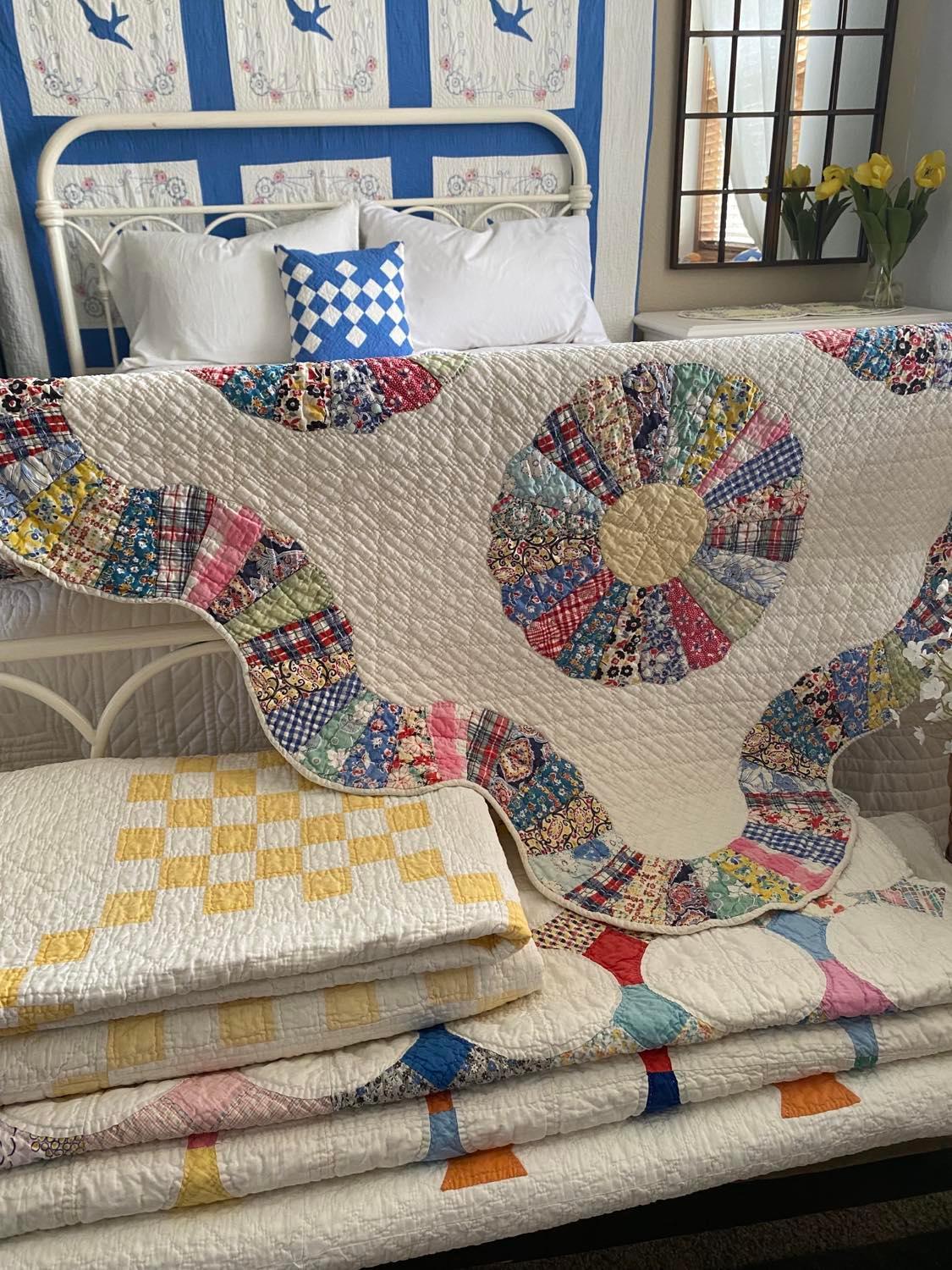
The story of feed sack quilt patterns is fundamentally about resourcefulness. Families repurposed empty sacks into clothing, household linens, and quilts. When manufacturers realized printed cotton sacks could protect products during shipment while offering valuable fabric for home use, the market shifted. By the early 20th century, feed and flour mills began printing colorful designs directly onto their packaging.
At Vintage Blessings, we’ve spent nearly three decades sourcing and studying these textiles. Women across rural and urban households suddenly had access to dress-quality fabric at minimal or no cost, changing how people dressed and what they could create for their homes.
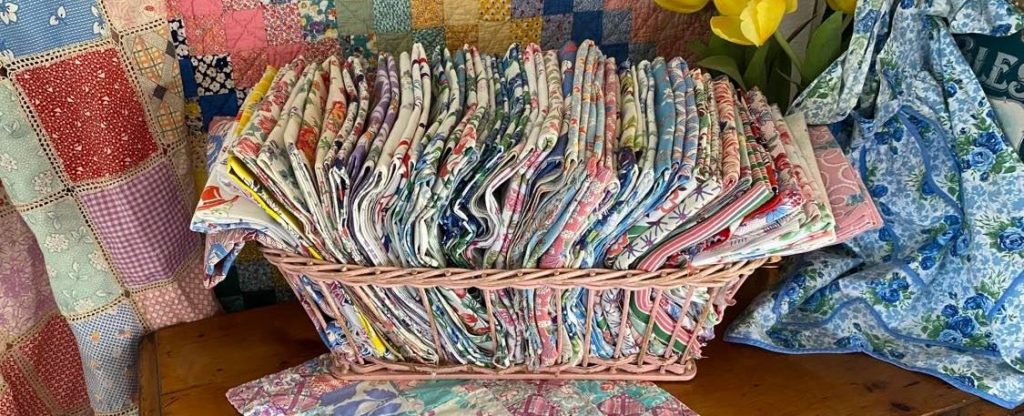
Early printed sacks featured simple geometric patterns and florals. As competition intensified, designs grew more elaborate, and some manufacturers released themed series that coordinated across multiple sacks, inviting families to collect sets. This marketing genius transformed feed sacks from waste into collectible commodities.
The Rise of Printed Cotton: Flour, Sugar, and Animal Feed Packaging
Printed cotton on feed sacks was a calculated business strategy: mills needed to differentiate products on crowded shelves, and consumers wanted value beyond the contents. Printed packaging offered both.
Flour mills led this innovation. Companies like King Midas, Pillsbury, and Gold Medal recognized that attractive packaging could influence purchasing decisions. Sugar companies followed, along with manufacturers of animal feed, salt, and other dry goods. By the late 1920s, printed feed-sack fabric had become a marketing phenomenon that extended far beyond the agricultural supply chain.
Fabric quality varied considerably. Some sacks featured vibrant, long-lasting colors; others faded quickly with washing. The cotton ranged from lightweight muslin to sturdier canvas, and savvy householders learned which mills produced the most durable fabric.
The designs themselves reflected broader fashion and interior design trends. Art Deco influences appeared in geometric patterns. Pastoral scenes depicted farm life and countryside imagery. Nursery rhymes and children’s characters adorned sacks marketed toward families. Patriotic motifs emerged during wartime.
Women didn’t simply accept whatever design came with their purchases. They sought specific patterns, traded duplicates with neighbors, and planned purchases around new releases. This behavior transformed feed-sack fabric from packaging byproduct into a genuine textile commodity.
1930s Feed Sack Quilts and the Depression Era
The Great Depression accelerated the cultural significance of feed sack quilts. Economic hardship made resourcefulness a necessity, and feed-sack fabric represented free or nearly-free material for clothing and home textiles. What might have been viewed as making do became a widespread practice across all economic classes.
During the 1930s, feed sack quilt patterns became more ambitious. Creating beautiful things from humble materials provided both practical bedding and emotional sustenance, and the quilts often featured dozens of different prints, each sack a small piece of family history.
Manufacturers responded by releasing coordinated collections marketed toward quilters, and some mills printed simple quilt patterns and instructions on their packaging. This direct engagement created a feedback loop: the more women used feed-sack fabric for quilts, the more mills invested in designs quilters wanted.
The Depression era also saw community quilting practices centered around feed-sack fabric. Church groups, neighborhood circles, and family gatherings involved trading sacks and sharing patterns, transforming individual quilting into a shared cultural experience.
Quilts from this period often show remarkable sophistication despite humble materials. Women combined feed-sack prints with solid-colored fabrics and careful piecing, and many have survived seven decades or more, testament to both the cotton’s quality and their makers’ skill.
Feed Sack Quilt Blocks: Common Patterns and Construction
Feed sack quilts employed a relatively consistent set of block patterns, though the specific fabrics created endless variation. Understanding these patterns helps identify and date feed-sack quilts.
The Double Irish Chain stood among the most popular patterns for feed-sack quilts. This pattern alternates solid-colored blocks with pieced blocks containing small squares in contrasting fabrics.
Nine Patch blocks offered another favorite choice. These simple nine-square grids could incorporate multiple feed-sack prints in the corner and edge squares while using solid fabric for the center.
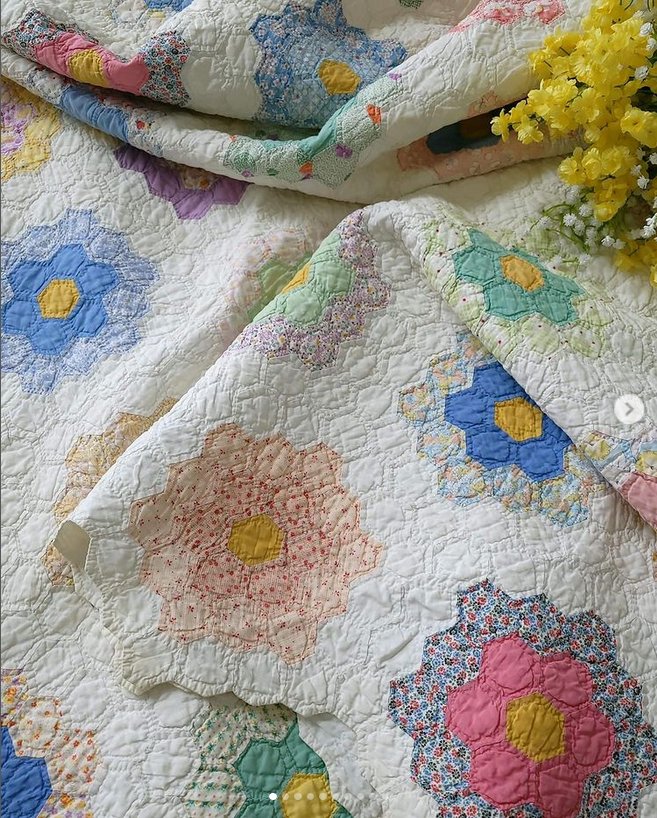
Grandmother’s Flower Garden, a hexagon-based pattern, gained popularity during the 1930s and 1940s. Quilters could use different feed-sack prints for each flower, creating intricate compositions from dozens of small pieces.
Log Cabin patterns also appeared frequently in feed-sack quilts. These blocks built around a central square using strips of fabric arranged in a spiral.
Construction techniques reveal practical considerations. Many quilters used feed-sack fabric for the top while reserving more durable fabric for the backing, and batting ranged from commercial cotton to repurposed blankets.
Fabric cutting speaks to quilters’ resourcefulness. Feed sacks came in standard sizes, and quilters planned projects around these dimensions to minimize waste, cutting maximum usable pieces from rectangular sacks.
How to Identify Feed Sack Fabric in Vintage Quilts
Distinguishing feed-sack fabric from other vintage cotton requires understanding its distinctive characteristics. Several markers help identify authentic feed-sack quilts and separate them from later reproductions.
The selvage, the finished edge of the fabric, often provides the clearest identification. Authentic feed-sack fabric will have tell-tale tiny holes where it was seamed together. The thread used was thick and created the tiny holes along the long edges..
Print characteristics distinguish authentic feed-sack cotton from later reproductions. Original prints from the 1920s through 1950s used specific dye processes and printing techniques that created particular visual qualities.
The cotton weight and weave of authentic feed-sack fabric varies more than modern reproductions, from lightweight muslin to sturdier canvas-like weaves.
Pattern selection offers another identification clue. Certain designs appeared only during specific periods. Art Deco geometric patterns dominated the 1920s and early 1930s. Novelty prints featuring popular characters and nursery rhymes emerged in the 1930s and 1940s.
Sign up and get first notices on new finds & sales! →
Wear patterns and aging also tell stories. Authentic vintage quilts show consistent wear, fading from light exposure, softening from use, and sometimes staining from storage. A few of these quilts were safely put away and never used. They look like the day they were made.
World War II and Patriotic Quiltmaking
World War II transformed feed-sack quilt patterns and their cultural meaning. Manufacturers released patriotic designs, and quilters embraced these fabrics as expressions of civic participation and support for the war effort.
Patriotic feed-sack prints featured flags, eagles, military insignia, and slogans supporting American servicemen and the home front effort. Stars and stripes appeared in countless variations. Some designs incorporated images of military equipment or uniforms.
Women’s magazines and manufacturers promoted patriotic quiltmaking as a way to support the war effort while creating needed bedding. Some quilts were raffled or auctioned to benefit military relief organizations, giving the activity heightened meaning and social significance.
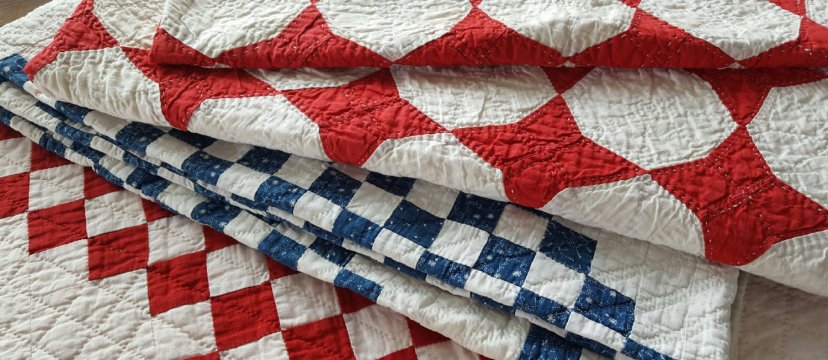
Feed-sack quilts produced during 1941-1945 often show distinctive characteristics. Patriotic prints dominate the fabric selections, and color palettes lean toward red, white, and blue.
Patriotic quiltmaking extended beyond individual households. Churches, women’s organizations, and community groups organized quilting bees to produce patriotic quilts for service organizations, reinforcing community bonds while channeling women’s labor toward the war effort.
The transition from patriotic wartime quilts to post-war patterns happened gradually. Some manufacturers continued releasing patriotic designs into the late 1940s, while others shifted toward new aesthetic directions.
Collecting and Preserving Feed Sack Quilts Today
Feed sack quilts are increasingly recognized as significant cultural artifacts. Collectors, museums, and historians now understand these quilts as windows into women’s lives, economic history, and American domestic practice across the 20th century.
Authentic feed-sack quilts command attention from serious collectors because they document the evolution of commercial design and marketing, showcase women’s creativity applied to practical household needs, and tell stories about family life and community practices across generations.
Preservation requires understanding the specific challenges these textiles face. The cotton has aged differently depending on storage conditions, use patterns, and dyes employed.
Proper care begins with careful handling. Feed-sack quilts should be stored in acid-free, lignin-free materials in cool, dry environments. Avoid direct sunlight, which accelerates fading. Using a vintage, pure cotton pillowcase is always a good choice.
Documentation enhances the value and historical significance of feed-sack quilts.
Museums and historical societies increasingly seek authentic feed-sack quilts, recognizing that they document important aspects of American material culture, women’s history, and economic history.
At Vintage Blessings, we work with collectors and institutions to identify, authenticate, and preserve feed-sack quilts.
Understanding the history of feed sack quilt patterns connects us to the ingenuity of women who transformed humble packaging materials into enduring works of textile art.
Pattern Name | Primary Period | Block Structure | Fabric Efficiency |
|---|---|---|---|
Double Irish Chain | 1920s-1950s | Alternating solid and pieced blocks | Moderate, requires coordinated prints |
Nine Patch | 1930s-1950s | Nine-square grid | High, uses multiple small pieces |
Grandmother’s Flower Garden | 1930s-1950s | Hexagon-based flowers | Low, requires many small pieces |
1920s-1950s | Spiral around center square | High, strips use fabric efficiently |
Smithsonian’s textile conservation guidelines
American Quilt Study Group research on feed-sack textiles
Library of Congress documentation on Depression-era domestic practices
Frequently Asked Questions
What is the history of feed sack quilt patterns?
Feed sack quilt patterns emerged in the 1920s when flour mills, sugar companies, and animal feed manufacturers began printing colorful designs on cotton packaging. Farm families repurposed these printed cotton sacks into quilts, combining utility with creativity. The practice peaked during the 1930s Depression era when fabric scraps became precious, and continued through World War II, when patriotic prints encouraged the tradition. What started as practical resourcefulness became a cherished textile art form.
How can you identify feed sack fabric in a vintage quilt?
Feed sack fabric typically shows distinct characteristics: small-scale, repeating printed patterns on plain cotton, often featuring gingham checks, florals, or geometric designs. Look for selvage edges with manufacturer marks or mill names. The cotton is usually lightweight and tightly woven. Examine the color fastness—authentic feed sack fabric may show uneven fading from storage or use. Compare the print quality and color palette to documented examples from specific decades; 1930s prints differ noticeably from 1950s reproductions in dye chemistry and design complexity.
What patterns were commonly made with feed sack fabric?
Popular feed sack quilt blocks include the Bow Tie, Nine Patch, Double Irish Chain, and Dresden Plate patterns. Many quilts combined multiple feed sack prints in a single block, creating dynamic color combinations. The small scale of feed sack prints made them ideal for intricate patchwork that showcased the variety of available patterns.
When did feed sacks become popular for quilting?
Feed sack quilting gained significant popularity during the 1920s and exploded during the 1930s Depression era, when economic hardship made fabric reuse essential. Manufacturers actively encouraged the practice by printing attractive designs specifically marketed for quilting and sewing. The trend continued strong through the 1940s and 1950s, gradually declining as commercial fabric became more affordable. By the 1960s, feed sack quilting had largely faded, though collectors and historians now recognize the 1930s-1950s period as the golden age of this textile tradition.
How were feed sacks used to make quilts?
Farm families collected printed cotton feed sacks from flour, sugar, and animal feed purchases. They carefully cut these sacks into squares, strips, or shapes for quilt blocks, often combining multiple prints for visual interest. Quilters pieced these printed fabrics with plain cotton or muslin for backing and batting. The small scale of feed sack prints allowed efficient cutting with minimal waste—a critical consideration during the Depression. Many quilts featured a mix of feed sack prints in the pieced top with plain cotton backing, creating heirloom pieces that told the story of what families could afford.
What makes Depression-era feed sack quilts different from later reproductions?
Authentic Depression-era feed sack quilts show genuine aging, uneven fading, and wear patterns consistent with 1930s-1940s use and storage. The printed designs reflect period dye chemistry, which differs noticeably from modern reproduction prints in color saturation and pattern clarity. Original quilts often feature hand-stitching with period-appropriate thread and batting materials. Reproductions, made from newly manufactured feed sack-inspired fabric, lack authentic wear, show uniform color throughout, and may display printing techniques unavailable in the 1930s. Examining selvage edges, construction methods, and fiber content helps distinguish genuine vintage pieces from later recreations.
Why did manufacturers print designs on feed sacks?
Feed manufacturers recognized that attractive printed packaging encouraged repeat purchases and brand loyalty. Colorful designs transformed utilitarian cotton sacks into materials consumers wanted to keep and repurpose. This marketing strategy proved especially effective during the 1930s Depression, when families valued every scrap of material. Manufacturers competed by offering new patterns regularly, and some even allowed customers to collect matching sets for coordinated quilts. This symbiotic relationship between manufacturers and quilters created a unique moment in textile history where commercial packaging became raw material for folk art and family heirlooms.